Guide
Boxing at Home: How to Train Without a Gym
Boxing at home, step by step: space, minimal gear, shadowboxing, bag work and a weekly plan you can keep. What you need and what you can skip.
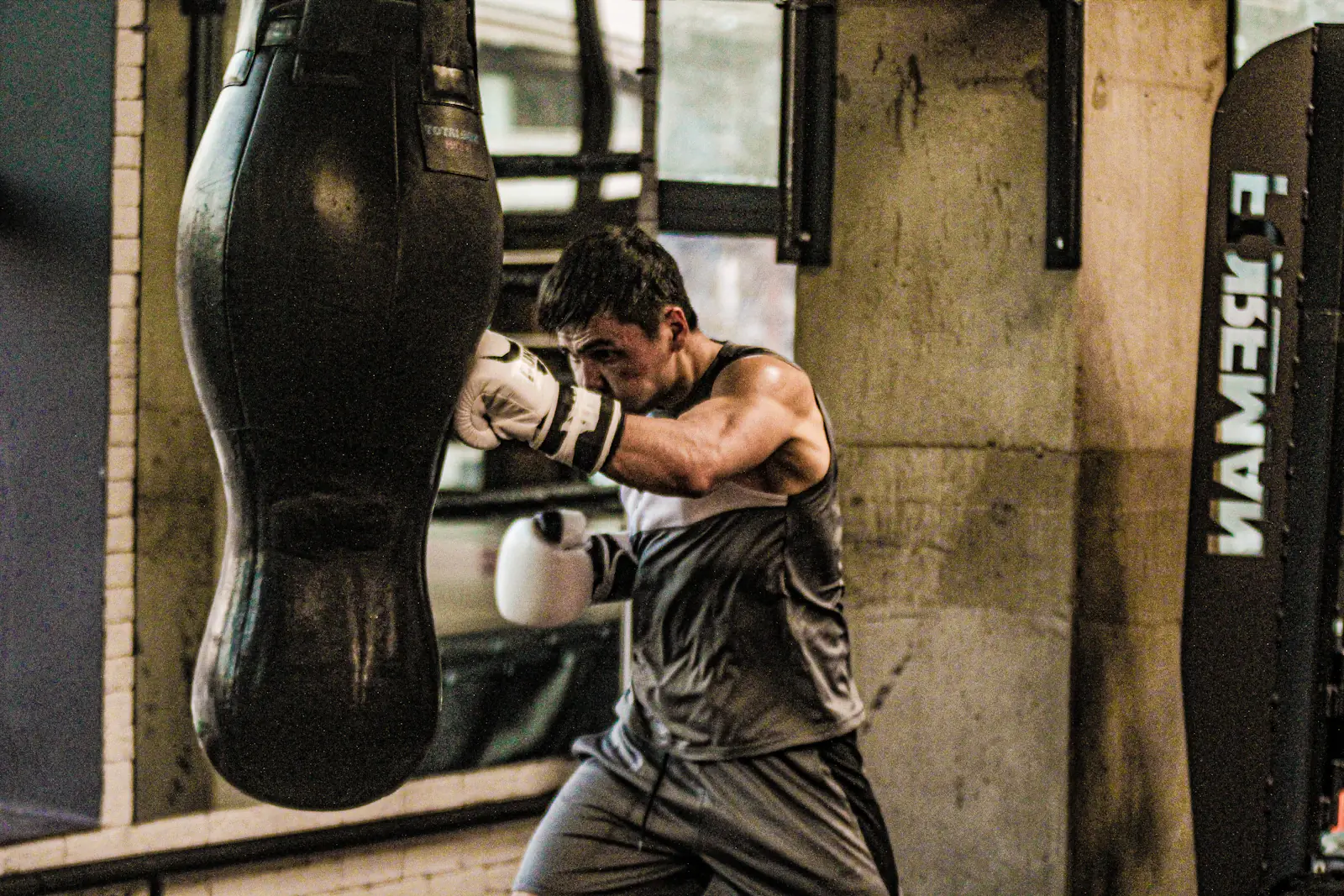
Training at home costs less, answers to no schedule, and you can start tomorrow. It is also the surest way to build habits nobody will correct.
Here is what genuinely works alone, what does not, and the order in which to spend money.
The short answer
For the first six weeks you need nothing. Six by six feet, a jump rope, and a mirror or a phone propped against a wall. Shadowboxing and rope cover most of what you can actually improve on your own: guard, footwork, conditioning, punch mechanics.
Gear comes after, in this order: wraps, then gloves, then a bag. Buying the bag first is the most common mistake — and the reason secondhand listings fill up every spring.
| Session | Time | Gear needed | What it builds | Noise to neighbors |
|---|---|---|---|---|
| ShadowboxingTop pick | 15–30 min | None | Technique, guard, footwork | None |
| Jump rope | 10–20 min | A rope | Conditioning, footwork | Moderate, depends on the floor |
| Bodyweight strength | 20–30 min | A mat | Core, shoulders, legs | None |
| Heavy bag | 20–40 min | Bag, gloves, wraps | Power, output endurance | High — vibration |
| Filmed mirror work | 10–15 min | A phone | Fixing what you cannot feel | None |
Setting up your space
Floor area. Six by six feet allows a full shadow round with movement. Less than that and you stop moving your feet, which is an expensive habit to unlearn.
Ceiling height. Raise your arms overhead, then throw a full uppercut. If you touch the ceiling or a light fitting, pick another room.
The floor. This is the real constraint. Floating laminate amplifies everything; bare tile is slippery the moment you sweat. Rubber gym tiles, one to one and a half inches, solve both for about $40 — the best first purchase, ahead of gloves.
A mirror. A door mirror is enough. Failing that, a phone against a wall on video: you will see in ten seconds what you cannot feel.
Minimal gear, and what to skip
What actually matters, in order:
- Floor tiles — $40 to $80. They make everything else possible in an apartment.
- A jump rope — $10 to $25. Best conditioning per dollar in any sport.
- Hand wraps — $15 to $20, two pairs. See how to wrap your hands.
- Gloves — a single pair at 16 oz, which covers bag work and any future gym sparring. The size chart explains why.
- A bag, last. Type and constraints in our best punching bag comparison.
What to skip early on: reflex bags on a spring, which train little of use; weighted hand weights during shadow, which wreck shoulders and distort technique; and anything promising results without effort.
Shadowboxing: the workout that costs nothing
The most underrated exercise in boxing, and the only one you can do perfectly alone.
The idea is to box a real imaginary opponent, with the whole body engaged — not arms alone. Hips rotate, rear foot drives, feet reset after every punch.
A round structure that holds up:
- Round 1 — footwork only, no punches. Forward, back, pivot, feet never crossing.
- Rounds 2 and 3 — jab only, then jab-cross. Slowly, chasing alignment rather than speed.
- Rounds 4 and 5 — free combinations, adding a slip after each one.
- Round 6 — high intensity, guard held. That is where the flaw shows up.
Three minutes per round, one minute rest. Six rounds is a real session.
Film one round a week and check three things: does the rear hand return to your cheek, does your chin stay tucked, do your feet cross. Those are the three flaws most self-taught boxers develop.
The full session, block by block, is in our beginner boxing workout.
Adding a bag
Wait until you have held three sessions a week for two months. If the habit survives that, the bag is justified.
Two rules before buying. Your home decides the type, not your preference: if you cannot drill, that means a free-standing bag with a sand-filled base. And weight is calculated — about half your body weight.
Once it arrives, resist hitting hard. The first three sessions run at 50 percent, hands wrapped, to let wrists and joints adapt. That is where most self-taught injuries happen.
A weekly plan you can keep
Three sessions beat six abandoned in three weeks.
- Monday — 10 min rope, 6 rounds shadow, 15 min core.
- Wednesday — 10 min rope, 20 min bag (or 6 intense shadow rounds), lower body strength.
- Saturday — long session: 15 min rope, 8 mixed shadow and bag rounds, stretching.
Keep a full rest day between punching sessions. Wrists and elbows need it, and bone adaptation cannot be forced.
Common mistakes when training alone
Hitting hard before the technique is there. The bag never complains, and that is the problem. Placement first, power after.
Never filming yourself. Six months of a dropped guard settle in quietly.
Long, rare sessions. Two hours on Sunday is worth less than three thirty-minute sessions.
Skipping wraps because you are alone and “going easy”. Those are precisely the sessions where people get hurt.
Thinking it replaces a gym. Home training is an excellent complement and a good runway. It teaches neither distance nor timing.
What to remember
Start with nothing: six by six feet, a rope, a mirror. Six shadow rounds three times a week, filmed once a week, beat any purchase.
Then, in order: tiles, rope, wraps, gloves, bag. And give it two months of consistency before the bag.
When you are ready to step it up, a gym will fix in ten minutes what six months alone will not — and the full gear guide covers what to own by then.
Frequently asked questions
Can you really learn boxing at home?
You can build conditioning, footwork and the mechanics of the punches. You cannot learn distance, timing or how to read an opponent — those need someone in front of you. The real risk of training alone is automating a flaw nobody corrects, so film yourself weekly to limit it.
How much space do you need to box at home?
Six by six feet is enough for shadowboxing, provided the ceiling lets you raise your arms fully. For a free-standing bag, allow about a yard square for the base plus three feet of recoil room. The real constraint is almost never floor area — it is the floor itself and the neighbors.
What equipment do you need to start boxing at home?
Nothing at all for the first few weeks — shadowboxing and a jump rope cover it. When you want to hit something, you need wraps and gloves, in that order. The bag comes last, once you know the habit is going to stick.
How do I box at home without disturbing my neighbors?
What travels is vibration through the floor and walls, not the sound of impact. A free-standing bag on rubber gym tiles passes almost anywhere; a bag hanging from a shared ceiling slab is the worst case. Jump rope is often more disruptive than the bag itself.
Related reading
TrainingBeginner Boxing Workout: A Plan You Can Keep
A beginner boxing workout built on the basics: warm-up, stance, jab and cross, shadowboxing rounds and bag work. Sessions you can do at home, no partner.
How to Wrap Your Hands for Boxing
How to wrap your hands for boxing, step by step, with the mistakes that leave knuckles and wrists unprotected. Traditional wraps vs quick wraps.