Complete guide
Boxing Training: Learn to Box at Home
Boxing training for beginners and home boxers: how to start, wrap your hands, build a first workout and pick gear that matters. Written from practice.
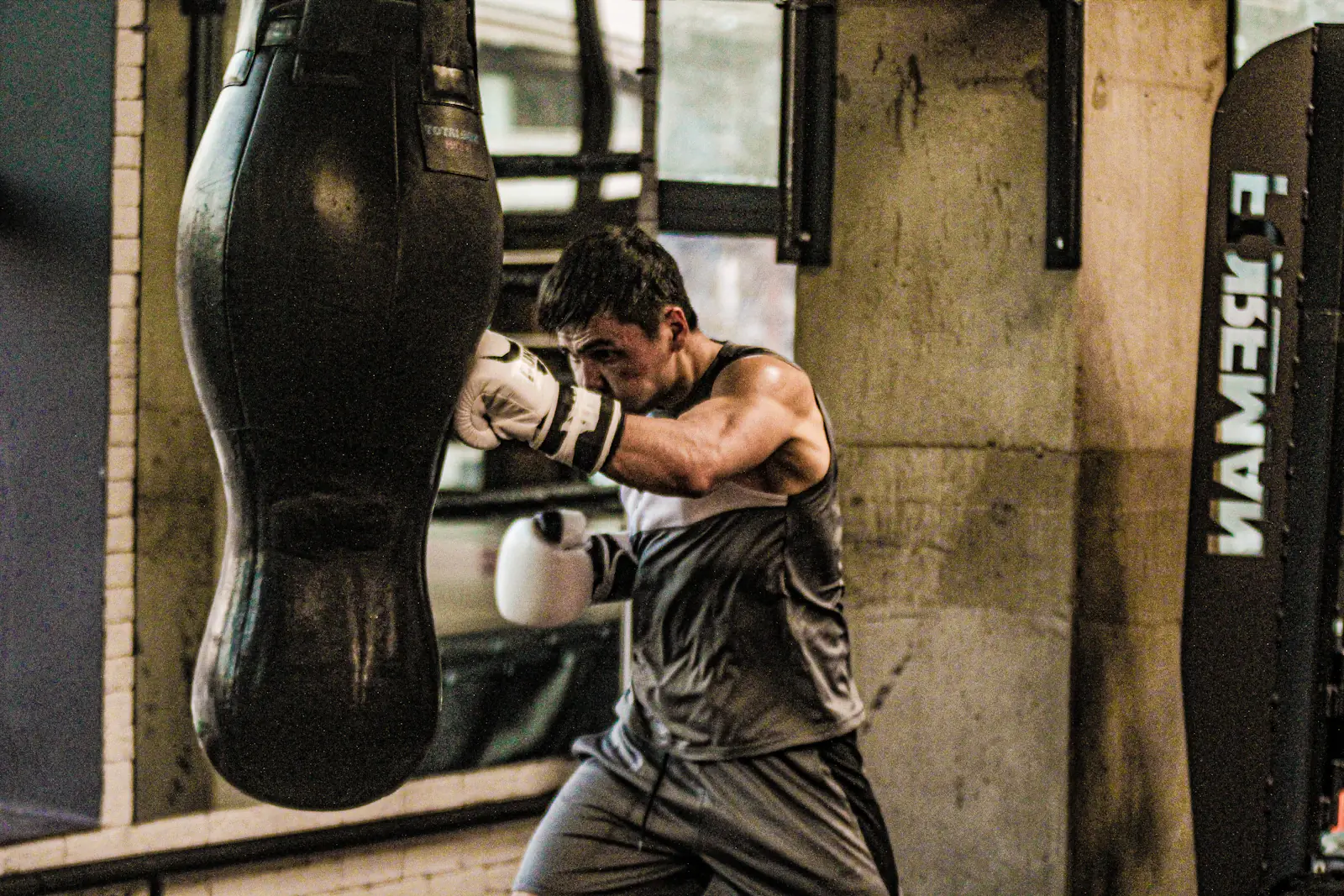
You do not need a gym membership, a coach on day one or a garage full of equipment to start boxing. You need a bit of floor space, a way to protect your hands, and a plan simple enough that you will still be following it in a month. Most beginners quit for one of two reasons: they hurt a wrist because nobody showed them how to wrap, or they bought a bag before learning to stand properly and got bored hitting it badly.
The guides in this section are written from what we actually do at home, on our own bag, with the same mistakes everyone makes at the start. They are not a substitute for a good coach; they are what gets you to the coach in one piece, or keeps you moving between sessions.
Start here
Boxing at home covers the space, the minimal gear and a weekly routine you can keep. Then how to wrap your hands shows the one skill to learn before you ever hit anything: it takes ten minutes to learn and protects the small bones you cannot afford to break.
Your first workouts
The beginner boxing workout builds a session around stance, jab, cross and shadowboxing rounds, with bag work added only once the basics hold up. No partner is needed.
When you need gear
Training pages stay free of shopping advice. When a guide calls for gloves, wraps or a bag, it points to the gear section, where every product has been bought and used by us before being recommended.
How long before you see progress
Honest markers, because most people quit believing they are not improving when they are exactly on schedule.
Two to three weeks — conditioning shifts. The first two minutes of shadowboxing stop burning your shoulders.
Six to eight weeks — guard and footwork start to feel natural. You stop crossing your feet without thinking about it.
Three to six months — combinations come out without counting them, and power starts coming from the hips rather than the arm.
Beyond that — distance and timing, which need a partner. That is the self-taught ceiling, and it does not break on its own.
Gym or home: what each one gives you
| At a gym | At home | |
|---|---|---|
| Technique corrected | Yes, immediately | No — hence the weekly video |
| Distance and timing | Yes | No |
| Consistency | Enforced by the schedule | On you |
| Annual cost | Membership | Gear, once |
| Taking a punch | Yes, supervised | No |
The combination that works best: two sessions at a gym, one at home. The gym corrects, home maintains.
One thing worth knowing before you walk into a gym: nobody is putting you in a ring. A beginner class is rope, guard, shadowboxing and bag work. Sparring comes months later, and never without headgear and a mouthguard.
The self-taught mistakes
Hitting hard before the placement is there. The bag never complains, which is the whole problem.
Never filming yourself. Six months of a dropped guard settle in quietly.
Training every day. Wrists and elbows need a rest day between punching sessions.
Skipping the wrist and shoulder warm-up. Those are what absorb the impact, not your biceps.
Thinking home training replaces a gym. It prepares you very well. It does not replace it.
In this section
3Beginner Boxing Workout: A Plan You Can Keep
A beginner boxing workout built on the basics: warm-up, stance, jab and cross, shadowboxing rounds and bag work. Sessions you can do at home, no partner.
Boxing at Home: How to Train Without a Gym
Boxing at home, step by step: space, minimal gear, shadowboxing, bag work and a weekly plan you can keep. What you need and what you can skip.
How to Wrap Your Hands for Boxing
How to wrap your hands for boxing, step by step, with the mistakes that leave knuckles and wrists unprotected. Traditional wraps vs quick wraps.