Guide
How to Wrap Your Hands for Boxing
How to wrap your hands for boxing, step by step, with the mistakes that leave knuckles and wrists unprotected. Traditional wraps vs quick wraps.
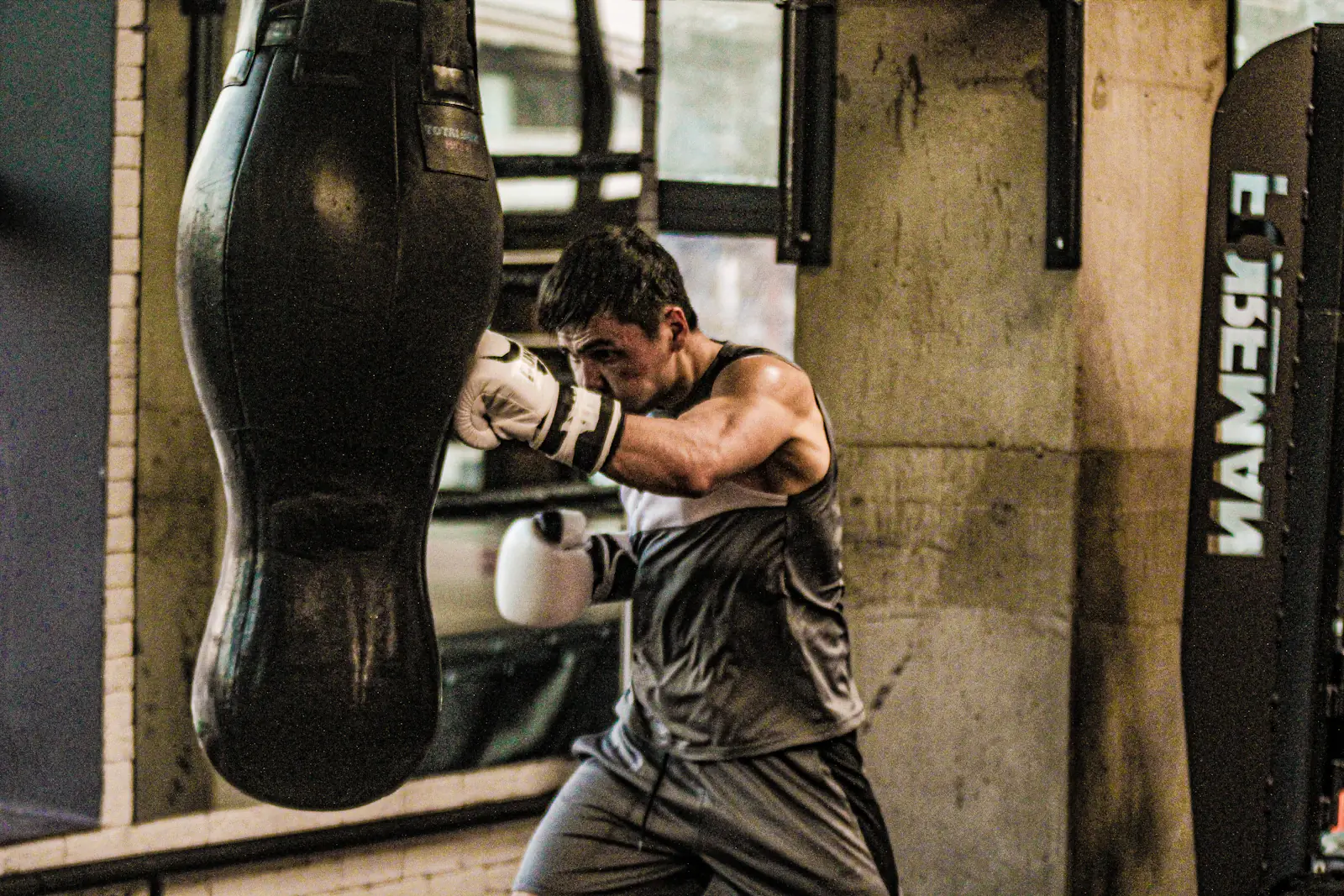
It is the step everyone rushes because it delays the part where you get to hit something. It is also the one that decides whether your wrists hold up for ten years.
Two to three minutes per hand the first time, under a minute after a few weeks. Here is the method — and, more usefully, the mistakes that make a wrap decorative.
Why wrapping matters
Most people think a wrap is padding. It is not, and that misunderstanding explains most bad wraps.
It holds the metacarpals together. On impact, the five bones of the hand want to spread. That spreading is what causes the “boxer’s fracture”, nearly always on the fifth metacarpal — the pinky side.
It locks the wrist. A wrist that folds backward at the moment of contact is a sprain. The wrist turns are the most important part of the whole wrap, more than anything you do over the knuckles.
It ties the thumb to the hand, instead of leaving it free to be bent back on a badly placed shot.
It absorbs sweat before it reaches the glove lining. That is what extends glove life more than anything else, and it is the only real answer to glove smell.
What it does not do: cushion. Cushioning is the glove’s job.
Step by step: the standard wrap
For a 180-inch semi-elastic wrap, right hand. Mirror it for the left.
- Thumb through the loop, wrap running over the back of your hand, palm facing down. The hook-and-loop closure should finish on the outside of the wrist.
- Three turns around the wrist, firm but not cutting. This is your anchor — everything else is built on it.
- Three turns across the palm, flat, over the knuckle line. No folds. A fold becomes a pressure point ten minutes in.
- Up to the thumb, one turn around its base, then back down to the wrist and around once. The thumb is now tied in.
- The fingers: from the wrist, up between the pinky and ring finger, back down to the palm, up between ring and middle, and so on. Three passes for three gaps, returning to the palm each time.
- Diagonals across the back of the hand, wrist to knuckles and back, until you run out of length.
- Finish at the wrist, two or three turns, closure laid flat on the inside — never over the wrist bone.
Two checks tell you if it worked. Close your fist: the wrap should tighten slightly without cutting. Open your hand: it should not squeeze. If both are not true, unwrap and redo it.
Bag work vs sparring
The wrap is not the same depending on what you are about to hit.
For the bag, the load is repetitive and straight on. Reinforce the knuckles: one or two extra palm turns, and more diagonals across the back of the hand.
For sparring, the load is unpredictable — shots land at angles you did not choose. Reinforce the wrist: four or five anchor turns, and one tighter pass to finish.
In both cases, the smaller the glove, the thinner the wrap needs to be. A thick wrap inside a 10 oz glove stops your fist from closing, and a fist that cannot close punches badly.
Common mistakes
Wrapping with the hand open or the fist clenched. The hand swells under effort. Wrap with fingers slightly spread and the hand relaxed, neither extended nor balled.
Skipping the gaps between the fingers. This is the step that gets dropped when you are in a hurry, and it is exactly what stops the wrap migrating toward your knuckles mid-session.
Finishing on the wrist bone. The closure over that bony ridge creates a hard spot you will feel by the end of round one. It goes on the inside, palm side.
Leaving folds. What is a dry crease in the changing room is a blister by round three.
Wrapping over a ring. Invisible under the wrap, and it crushes the finger on every impact. Take everything off first.
Traditional wraps vs quick wraps
| Traditional wraps | Quick wraps (inner gloves) | |
|---|---|---|
| Wrist supportTop pick | Strong, adjustable | Minimal |
| Knuckle padding | As much as you build in | Fixed, built in |
| Time to put on | 60–90 seconds per hand | Two seconds |
| Sweat absorption | Excellent | Good |
| Good for | Bag work, sparring, anything hard | Fitness classes, no-contact drills |
| Typical price | $8–$20 a pair | $15–$30 a pair |
Quick wraps — padded slip-on inner gloves — go on in two seconds and wash easily. For a fitness class with no contact, they are fine.
They do not lock the wrist, and that is disqualifying the moment you hit hard. The padding they add duplicates what the glove already does; the support they do not add is exactly what you were after.
Verdict: quick wraps for fitness and emergencies, real wraps whenever it counts.
Washing and replacing
After every session, without exception — that fabric absorbed all the sweat from your hand.
Machine wash at 85 °F in a mesh laundry bag; without the bag they wrap around everything else in the drum. Air dry only, since a tumble dryer kills the elastic within a few cycles.
Roll them up once dry. And own two pairs — one drying, one in use. That is twenty dollars that keeps you from putting on damp wraps, and damp wraps are what ruin a glove lining.
Replace them when the closure stops holding, when the stretch is gone, or when the edges start fraying.
What to remember
The wrap holds bone and locks the wrist; it does not cushion. Anchor at the wrist, three palm turns, one thumb turn, one pass between each finger, diagonals, finish at the wrist with the closure inside.
Fist closed, it tightens without cutting. Hand open, it does not squeeze. Fingers tingling means start again.
Once your hands are wrapped, make sure your gloves actually fit — glove size is tested with wraps on, never bare: see the boxing glove size chart.
Frequently asked questions
Do I really need to wrap my hands to hit a heavy bag?
Yes, as soon as you are hitting with intent. The wrap holds the five metacarpals together and locks your wrist in line with your forearm. Without it the glove absorbs the impact but holds nothing — that is how people end up with a boxer's fracture on the fifth metacarpal, or a sprained wrist.
How tight should hand wraps be?
Make a fist and the wrap should tighten without cutting; open your hand and it should not squeeze. If your fingers go pale, tingle or feel cold within two minutes, it is too tight — and that does not fix itself once you start. Unwrap and start over.
How long are boxing hand wraps?
180 inches (about 4.5 m) is the adult standard and suits most hands. 120 inches is short — you end up choosing between protecting the knuckles and supporting the wrist. Over 200 inches and the wraps bulk up enough that the glove will not close properly.
Can I use quick wraps instead of hand wraps?
For a fitness class with no real contact, yes. For bag work or sparring, no — quick wraps pad the hand but do not lock the wrist, which is the main thing a wrap does. They are a supplement, not a replacement, despite looking like one.
How do you wash hand wraps?
Machine wash at 85 °F (30 °C) inside a mesh laundry bag, otherwise they tangle around everything else in the drum. Air dry only — a tumble dryer destroys the elastic in a handful of cycles. Roll them up once dry and you will save yourself five minutes in the changing room.
Related reading
TrainingBeginner Boxing Workout: A Plan You Can Keep
A beginner boxing workout built on the basics: warm-up, stance, jab and cross, shadowboxing rounds and bag work. Sessions you can do at home, no partner.
Boxing at Home: How to Train Without a Gym
Boxing at home, step by step: space, minimal gear, shadowboxing, bag work and a weekly plan you can keep. What you need and what you can skip.